BY CORNELIUS KABWE
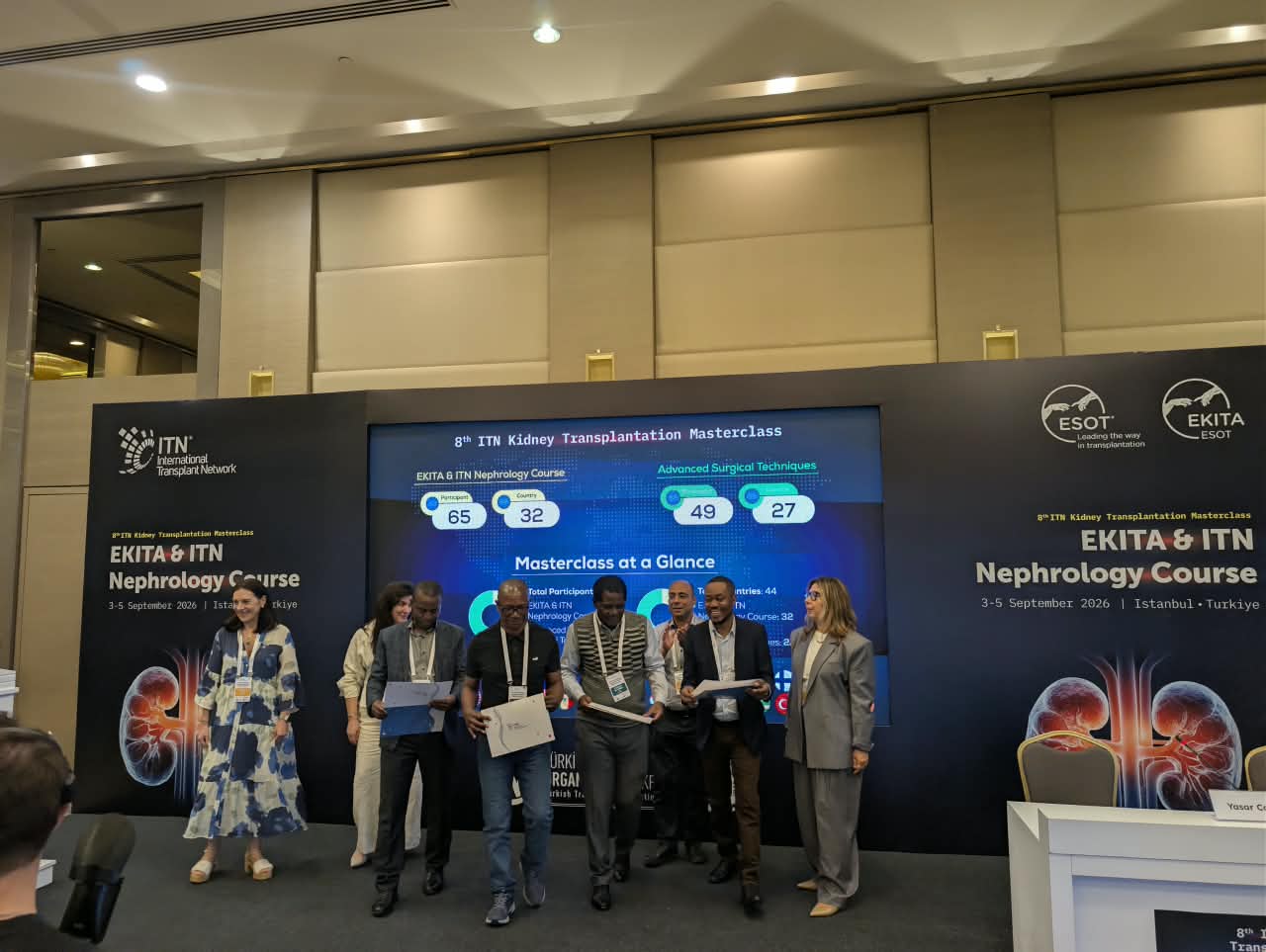
Zambia is strengthening its capacity to provide specialised kidney care locally, with four senior health experts joining international specialists at the 8th International Transplant Network (ITN) Kidney Transplantation Masterclass and the European Kidney Transplant Association EKITA & ITN Nephrology Course in Istanbul, Türkiye.
The three-day programme, running from September 3 to 5, brings together transplant and nephrology specialists from around the world to share knowledge and experience in kidney transplantation, transplant immunology, rejection, infection management, living donation and the long-term care of transplant recipients.
Representing Zambia are Dr Charles Mutemba, Senior Medical Superintendent at Levy Mwanawasa University Teaching Hospital (LMUTH); Dr Justor Banda, Senior Medical Superintendent at Ndola Teaching Hospital (NTH) and Chairperson of the Renal Society of Zambia; Dr Aggrey Mweemba, National Coordinator for Nephrology Services; and Dr Job Kasweshi from the Ministry of Health’s Clinical Care Department.
Their participation comes as Zambia continues to strengthen the specialist human resources, systems and infrastructure required to expand advanced renal services and establish sustainable kidney transplantation within the country.
Speaking from Istanbul, Dr Mweemba said the training forms part of Zambia’s ongoing efforts to develop the specialist expertise needed to establish and sustain a comprehensive kidney transplantation programme.
He said the International Transplant Network has supported Zambia through both long-term and short-term specialised training, contributing to the country’s growing expertise in transplantation and nephrology.
“Through the combined efforts of the Government of Zambia and the ITN, the country’s first kidney transplant surgeon received specialised training in kidney transplantation, while another nephrologist underwent advanced training in Türkiye,” Dr Mweemba said.
He added that ITN’s sponsorship of the four Zambian experts for this year’s masterclass represents another important investment in the country’s specialist human resources.
Dr Mweemba said bringing together senior hospital administrators, specialist clinicians and Ministry of Health officials at the programme reflects a coordinated approach to developing transplant services, linking institutional leadership, clinical expertise and national health priorities.
The Istanbul programme covers several areas critical to the development of a successful transplant service, including transplant immunology, nephrology, rejection diagnosis, infection management, donor evaluation, living-donor follow-up and transplant ethics.
Participants are also examining contemporary approaches to diagnosing and managing transplant rejection, including the Banff classification and molecular diagnostic tools. The programme further exposes participants to advanced surgical approaches, including minimally invasive and laparoscopic techniques used in living-donor kidney transplantation.
Dr Mweemba said the knowledge gained is particularly relevant as Zambia continues to build the multidisciplinary expertise required to provide transplantation services, bringing together surgeons, urologists, nephrologists, nurses, laboratory specialists and other healthcare professionals.
Beyond the surgical procedure itself, the programme places strong emphasis on nephrology and the long-term management of transplant recipients. Participants are reviewing approaches to post-transplant monitoring, rejection, infections and other complications, including the use of donor-specific antibody monitoring and kidney biopsies.
Dr Mweemba said this aspect of transplantation was particularly important because the success of a kidney transplant extends well beyond the operation.
“Zambia must continue developing the expertise, systems and follow-up services required to provide patients with lifelong care and maximise long-term graft survival,” he said.
The masterclass is also providing opportunities for the Zambian delegation to engage with European and Turkish transplant specialists, creating avenues for knowledge exchange, institutional mentorship, professional networks and potential clinical fellowships.
Dr Mweemba said such partnerships would be important as Zambia works towards developing a highly skilled and sustainable transplant workforce capable of delivering quality care locally.
Zambia’s ambitions, however, extend beyond individual training programmes. Under the Ministry of Health’s National Health Strategic Plan (NHSP) 2027–2031, the country plans to establish a fully fledged transplant centre that will provide an institutional foundation for kidney transplantation and support a more comprehensive national transplant system.
The planned commencement of a Master of Science (MSc) in Adult Nephrology programme this year is another step towards strengthening specialist renal care capacity. The programme is expected to contribute to the development of more locally trained nephrologists who can support renal replacement therapy, transplantation and comprehensive kidney disease management.
Dr Mweemba said these initiatives demonstrate Zambia’s commitment to developing a sustainable specialist workforce while investing in the infrastructure, training and strategic partnerships necessary to expand advanced renal services.
The participation of the four Zambian experts in the 8th ITN Kidney Transplantation Masterclass therefore forms part of a broader national effort to translate international expertise into stronger local systems.
It also builds on Zambia’s emerging experience with living-donor kidney transplantation, supported by the American College of Surgeons–Health Outcomes, Performance and Education (ACS-HOPE), as the country works towards establishing a fully fledged transplant centre and expanding access to advanced renal care.
For patients living with advanced kidney disease, the long-term significance of these efforts is the prospect of accessing increasingly specialised care closer to home.
As Zambia strengthens its workforce, develops the necessary infrastructure and builds international partnerships, the knowledge and expertise gained through platforms such as the Istanbul masterclass will contribute to the country’s journey towards a sustainable kidney transplantation service capable of meeting international standards and responding to the needs of its people.